
31 May The Amazing Online Service of the Game Boy Color
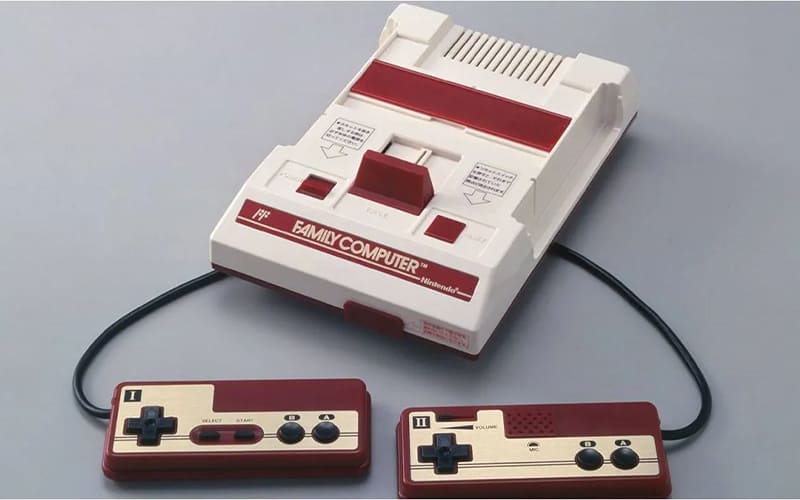
Most Nintendo consoles have had some form of internet connectivity. At least in Japan, the Famicom (Japan’s NES equivalent) allowed you to access banking services from home, and the N64 had its own custom online platform.
With the right cable and a mobile phone, you could connect your Game Boy Color to the Mobile System GB to play Monopoly, trade Pokémon, and—if you knew Japanese and had a Game Boy Advance—experience the written horror of Play Novel: Silent Hill.

The Mobile System GB wasn’t Nintendo’s first attempt to offer online services on its handhelds. Of course, it wouldn’t make sense on Game & Watch devices, which were essentially simple LCD games. The original monochrome Game Boy already had the GB Kiss by Hudson Soft, although that was mainly for connecting the handheld to a PC. The advantage of the Mobile System GB was that you could enjoy it anywhere. As the name suggests, the key was using mobile phone data—not Wi-Fi, but via a small cable.

The cable’s name was the Mobile Adapter GB, designed and produced by Nintendo in collaboration with the emerging carrier KDDI. It reflects an era when Nintendo’s peripherals and services were self-explanatory just by looking at the box. Its design and the way it connects the Game Boy Color to a phone couldn’t be simpler. Each package even included a cartridge called Mobile Trainer as an interactive manual. The starting point for this curious initiative was Mobile21, a joint venture between Nintendo and Konami launched in 1999 to develop future Game Boy Advance projects that would enable new game functions and original features making use of network connectivity.

Needless to say, internet in the pre-2000 era was very different from today. Data packets were exchanged, but the costs and procedures to access or exchange information were far more complex. Even so, Japan was almost a decade ahead: while people in the West were amazed by playing Snake on Nokia 3310s, Japanese players were already trading Pikachus for Rattatas online.

As with the Nintendo Switch and its successors, the handhelds of that time didn’t include modems. They also couldn’t connect via Wi-Fi. So, the necessary hardware—a cable—was developed to allow data exchange via mobile networks. Though the concept was promising, only eleven games were released through Mobile21.

Though the idea started in 1999, the official presentation of both the Mobile System GB and the Mobile Adapter GB took place during Nintendo Space World in August 2000—a kind of annual Nintendo E3 where they showcased their biggest news.

One of the first games compatible with the service was Pokémon Crystal Version for the Game Boy Color, enabling internet-based battles and trades, events, and even a news bulletin. That said, each Pokémon trade via internet cost 10 yen.

Today, the Pokémon phenomenon is experienced simultaneously and just as powerfully worldwide, but in the beginning, Japan was years ahead—sometimes decades. For context: the same year Pokémon Red and Blue began to spread in Spain, Japan was already marveling at the second generation: Gold and Silver. That gap widened with Pokémon Crystal and its online features.

Both the Mobile Adapter GB and the Mobile System GB were launched in Japan on January 27, 2001. It didn’t make sense to bring it to the West for three reasons:
- The service was managed in Japan by KDDI Corporation, which had just been formed by the merger of three companies.
- Most phones in Europe or the U.S. at the time weren’t equipped or structured to support this kind of functionality. Remember, we’re talking about the era of the Nokia 3310.
- And frankly, only five compatible games were ever released worldwide: Pokémon Crystal, Napoleon, Top Gear GT Championship, Mario Kart: Super Circuit, and ESPN Great Outdoor Games Bass.

Sorry, the comment form is closed at this time.